Showing posts with label media. Show all posts

Sunday, May 3, 2009

mercky waters

Publishing companies are struggling these days so it's no surprise to see the once super thick line between content and marketing getting a whole lot thinner. We've seen this phenomenon happening for some time in the mainstream press and the trades, but now it's hit the academic journals. And academics are pissed.

Merck cooked up a phony, but very real looking, peer reviewed journal with lots of glowing reviews and favorable data about Merck products. It's called the Australasian Journal of Bone and Joint Medicine and it's published by Elsevier, whom Merck paid to print its dandelion tome.

Advertorials aren't new to us, but there are a few problems when it reaches the academic and scientific world.

For one, advertorials are totally unfamiliar game in the academic world. But, because the journal contained "excerpts from peer-reviewed papers" it wasn't touted as a purely marketing journal, which makes it even worse.

The average researcher or primary care physician wouldn't know that the journal is just one big dandelion. Why? Because the journal has a fake "honorary advisory board" with real (sketchy) people.

And lastly, being published by Elsevier makes the journal totally credible. Which of course is why Elsevier sold their soul. They could care less about integrity and were obviously in it just for the money. I'm sure selling your soul commands a hefty fee.

There will probably be a lot of jobs on the chopping block for this dandelion, and there very well should be. That's the price that Merck and Elsevier pay for treading in mercky waters.

Tuesday, April 28, 2009

the world's most influential person

It's official. The World's Most Influential Person is...

No, it's none of the above. It's moot, founder of 4chan.

A few days ago, followers of 4chan hacked into the TIME 100 poll and catapulted their 21 year old founder (a.k.a. Christopher Poole) to the top of the list through millions of dandelion votes. The poll closed today with moot way ahead of the pack with an average rating of 90 (out of a possible 100, I guess) and nearly 17 million votes.

TIME.com managing editor Josh Tyrangiel says, despite hacking the vote, moot is no less deserving than previous title holders, noting, "I would remind anyone who doubts the results that this is an Internet poll," he says. "Doubting the results is kind of the point."

Indeed. Especially when the result is one gigantic dandelion.

Thursday, April 23, 2009

moot is time inc's top dandelion

Seems like the infamous 4chan gang is at it again.

Time Inc. just caught a fun little dandelion called "moot" brought to them courtesy of 4chan. The uber-passionate followers of hacker's holyland have just hijacked Time's annual online poll of the top 100 most influential people in government, science, technology and the arts and flooded it with fake votes for "moot" (real name Christopher Poole), the 21 year old founder of 4chan.

According to FOLIO, hackers used “autovoters” to place more than 16 million votes for "moot" (that's seven times more than the next guy). They've also rearranged the top 21 names so that the first letter of their names—looking down the list—spelled out the phrase “Marblecake Also the Game.”

So, in keeping with Time's tradition, will "moot" be included in the magazine’s official list, which is schedule to publish on May 1? Voting closes on April 28 and considering moot's gigantic lead, he's bound to stay on top. Ooh, I can't wait to find out.

Monday, April 20, 2009

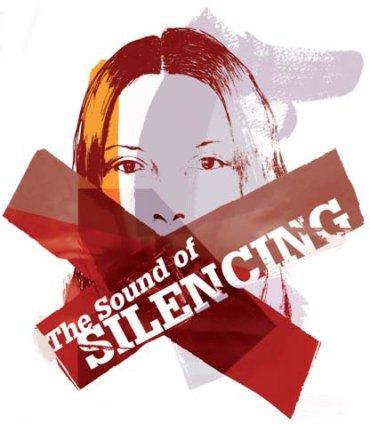
sound of silence


This past weekend, my whole family was closely watching a blog because of a scandalous post involving someone we know really well. Some of us barely slept, staring at our RSS feed to read the latest comment - usually nasty and admittedly, pretty darn juicy. Truth is, the blog post itself wasn't so horrible - it didn't reveal any names or facts, just an alleged scandal and a couple of initials. Nothing very risky. But people's comments? Well, they were something wicked.

It was like "Mean Girls" on steroids. Anonymous comments uncovered the real names behind initials (including a mother's maiden name), nasty rumors (sex, money, infamy), and other really dreadful dandelions I'd rather not say. As a voyeur I started to feel really guilty - perhaps I wasn't any better than the people posting comments. After all, the more they posted, the more I read.

But by Sunday the blog post was silent. The post and all comments had been taken down entirely. My guess is the blogger was threatened with a lawsuit. Which got me thinking...

What is the extent of our responsibility for dandelions that we post or get posted on our blogs? Bloggers might be ethically obliged to remove libelous comments, especially when anonymous, but I wonder whether leaving them would be considered illegal. I also wonder about all the dandelions that bloggers post unknowingly - at what point are those considered crimes?

Well, apparently when they're written with the intent to harm others. At least in South Korea.

Yesterday, a famous South Korean blogger Park Dae-Sung, better known as Minerva, was acquitted on charges that he posted false information about the South Korean economy which inadvertently sunk the foreign currency market costing the government billions of dollars. Minerva was acquitted because the judge found that he posted his statement unknowingly and therefore did not intend to harm the public. This, of course, after spending 100 days in jail.

So what of the anonymous mean commenters? In that case, perhaps the blogger is responsible because he's hosting the forum that allows the harm to take place. But rather than leave it to the law (and who knows what rights they'll take away), it should be our responsibility as readers to weed out the dandelions from the daisies. That to me sounds better than the sound of silence.

Sunday, April 19, 2009

madonna's fantasy paparazzi


I don't normally read celebrity news, unless it's about Madonna. I can't help it because she's just fabulous. So, of course I was totally disturbed to hear that she fell off a horse this morning while riding in Southampton because of some nasty paparazzi. According to Madonna, the paparazzi jumped out of the bushes and totally freaked the horse out resulting in Madonna falling and suffering some minor scrapes and burns.

But, apparently this is just a dandelion. An update to the story in the NY Times this evening notes that the fall is real, but according to a photographer/ paparazzi who was at the scene before and after the fall, Madonna was on her own. The only photographer who happened to be there was her host, fashion photographer Steven Klein. So, no paparazzi in sight?

I can't actually fault Madonna for blaming the paparazzi. She might as well have someone to blame and they're the perfect target. But, Madonna creating dandelions? I thought she was a lot more fabulous than that.

Thursday, April 9, 2009

fix news

I don't mean to rip into Fox News (again), but they keep creating paranoiac dandelions so I can't help myself. Maybe Fox News should be called Fix News because they certainly need rewiring (pun intended). Recently they've accused the White House of trying to impose Islamic Sharia law in the U.S.


Apparently, an email posted in 2007 in National Review’s blog claims that Yale Dean Harold Koh, State Department Legal Adviser nominee, had said — at a speech before the Yale Club of Greenwich — that Sharia law could apply to the U.S. However, the White House states that the allegations are untrue, and even Fox can't verify the claim.

But because they are "fair and balanced," Fox decided to run the story anyway. 'Coz why the heck not create some more dandelions and a little paranoia to go along with it?

Regardless of whether this is a dandelion, not all aspects of Sharia law may be so horrible. A quick search on Wikipedia - admittedly not the most reliable source - illustrates that there are many parallels between the U.S. Constitution and Sharia law (prohibition of illegal drugs, for one). And, apparently there is even controversy surrounding suggestions that English common law was inspired by medieval Islamic law. Ok, so maybe I'm getting ahead of myself and that's a dandelion too...

Monday, April 6, 2009

serve scathum

The more I research dandelions, the more I realize how crazy some people really are. Apparently this video is just for fun? It's totally ridiculous and utterly stupid, for sure, but funny? Ok, so I did chuckle (out loud), but the scary thing is that there are many loopy people who actually believe that Obama is the antichrist. It's the definition of agnotology.


Not sure if I heard "serve satan." Sounds more like "serve scathum" to me, but honestly you dandelion creator people... really? I can't believe people have the time to make these. There is even an entire YouTube channel devoted to Antichrist Obamanation (I am not making this up) that includes videos relating Obama to the antichrist, i.e., speech reversals, biblical code, Nostradamus. Totally out of control, isn't it? At least now we know where Fox gets their news...

Sunday, March 22, 2009

fair and balanced?


Fox News seems to be spreading some dandelions of its own lately. First they defended Aaron Klein's fake Wikiepedia entry about Obama's birth certificate, and then last week they aired an old clip of Joe Biden that they tried to pass as new. This week, Fox News' Trace Gallagher said that the Dow was up 28 points when President Obama began his stimulus package speech and dropped to -28 by the time his speech was over. But, this just wasn't true.

The video from DailyKosTV shows that during President Obama's speech the Dow actually gained six points. After starting at -34, it ended at -28 points by the time he was finished. Never mind that it is completely ridiculous to tie Obama's speeches to our gyrating markets. What's most disturbing is Fox News' motto: "Fair & Balanced." Unfortunately, I don't see a lot of fair and balanced when it comes to Obama. I mostly see dandelions.

I guess this is what Stanford U's Robert Proctor meant by agnotology. I can only imagine that the next time I see my mother (a Fox fan and Sean Hannity devotee) she'll bring up this dandelion Dow as a way to say she told me so. And even if I tell her it just wasn't true, it will already have been too late.

Sunday, March 15, 2009

agnotology

Is the web making us smarter or are we more ignorant than ever? With so many facts at our digital fingertips, access to information to gain a deeper understanding of just about anything, you would think that we have more knowledge. But with all the dandelions in cyberspace - like the latest fumbled attempt about Obama's citizenship - perhaps the argument that we've entered a "disinformation revolution" actually has some merit.

Robert Proctor, a Stanford U historian of science and technology, believes the more we know the more uncertain we are. He coined the term "agnotology," which is the study of "culturally-induced ignorance." Proctor testified against the tobacco industry in the late 90's and cited the tobacco industry's attempt to suppress information about the cancerous risks of tobacco consumption as an example of agnotology. He argues that special interest groups seed doubt because it's in their interest to suppress the truth. Hence, those dandelions about Obama being a Muslim, or the tragic rumor about global warming not caused by man, are actually attempts by special interests to create utter confusion so that we reach a point where we just "stop caring about what's true and what's not."

We're not all doomed to ignorance though. Although one can argue that the internet has "inherently agnotological side effects" I believe that it actually does a good job of nurturing awareness and knowledge. The good news about the web is that bad seeds are almost always exposed, and rather quickly I might add. The bad news: it's hard to reverse ignorance, especially when that bad seed has already spread.

Saturday, February 28, 2009

Eric Goldman on wikipedia and catching dandelions


I was thrilled when Eric Goldman, cyberlaw professor at Santa Clara University and director of the school's High Tech Law Institute, agreed to a Q&A with catching dandelions. I recently wrote about the point Prof. Goldman made at the Silicon Flatirons conference earlier this month on "Why Wikipedia Will Fail." He believes that Wikipedia has to wrestle between being high-quality and open to the public to edit, but it can't be both.

Eric Goldman's research focuses on internet law, intellectual property, marketing, and the legal and social implications of new communication technologies. You can read his blogs here and here and follow him on Twitter.

Q: If Wikipedia should choose between being high-quality and freely editable, which one would you prefer they choose? Why?

High quality. Otherwise, the database becomes useless. In fact, Wikipedia has implicitly chosen higher quality as they slowly "raise the drawbridge" on user editability. See, e.g., their recent "Flagged Revisions" proposal.

Q: You must have heard about the WikiDashboard designed by PARC that allows for more transparency on Wikipedia entries. Do you think that the dashboard will help raise the quality level of Wikipedia entries?

It is a mixed blessing. On the one hand, additional transparency can help identify and fight malicious edits. On the other hand, when Wikipedia editors overreact to companies or individuals editing entries in which they may have an economic interest, increased transparency may paradoxically increase unwarranted reverts.

Q: Why do people still source Wikipedia - like the German press recently did with the name of the new economic affairs minister - knowing full well that it is littered with dandelions?

That's a great question, and I'm not sure if I have the complete answer. One hypothesis is that searchers assume that a high Google ranking means that the site is trustworthy. Another is that people still assume anything in digital format is trustworthy.

Q: I love Wikipedia and know many people who do. Although we don't believe it is high-quality, it is good enough. At the very least, you learn something new. Why can't Wikipedia just be "good enough"?

I think Wikipedia is a terrific resource when used properly. However, I fear that Wikipedia will be overrun by spammers and vandals, at which point it may no longer be good enough.

Q: With so many dandelions in cyberspace, do you think our notion of trust has been reshaped by the web?

When my generation was in school, we were not trained how to assess the credibility and veracity of printed information. For the most part, we assumed that printed information was presumptively credible. I hope that future generations will be trained differently in school and will realize the importance of determining credibility. Personally, I don't see any other viable path for the future. If in fact students are better trained in the future, then our norms about trusting online content will be radically reshaped.

Q: What are your three FAVORITE dandelions?

I had never really thought about this! Some favorites:

Zeran v. America Online. An anonymous AOL user pulled a very nasty prank on Kenneth Zeran by posting fake but highly inflammatory content online with Zeran's home/business phone number. The hostile reaction caused Zeran to be out of business for weeks and to get police surveillance because he got so many death threats.

Listings on dating websites falsely saying that the prank's victim is looking for sex. Carafano v. Metrosplash is an early example, but there have been others.

Google News' republication of a story about United Airlines' bankruptcy with an ambiguous date stamp, which helped cause United Airlines' stock to plummet by 75%, costing investors hundreds of millions of dollars in market cap for a short period of time. For a two-decade old example of a similar problem, see Daniel v. Dow Jones.

Thanks Professor Goldman!

Friday, February 27, 2009

Naba-who?


Kuala Lumpur's New Strait Times reported on this 100-foot long snake a few days ago. Even the Scientific American weighed in with a digital photography forensic examination. I am no photoshop expert, but it's not hard to tell that this is one GIGANTIC dandelion. What amazes me is how the media can pick-up on and report this kind of thing without verification. It apparently got a whole bunch of people in Borneo scared out of their wits. Says the London Telegraph, "...on the banks of the river, villagers are convinced of the massive serpent's existence and have even given it a name, Nabau, after an ancient sea serpent which can transform itself into the shapes of different animals." Hmm, maybe it will turn into a big ape next.

Thanks to Boing Boing (one of my fave sites) for revealing the original image yesterday, which obviously shows that the snake is fake.

Sunday, February 22, 2009

balancing act

The editor of the newspaper where I work sent me this column by Clark Hoyt, public editor of the NY Times. It came as a surprise because my editor is anti-blogging and when I told him I had started one for class, he just rolled his eyes. (For the record, I am not a journalist and this blog has nothing to do with the unnamed newspaper - it's part of my semester long project as a grad student in strategic communications.) Anyway, I'm glad he sent it because it's a pretty interesting article on how some dandelions are born.

The column discusses how on the web, journalists and editors - even at the NYT - have to struggle to find the right balance between thorough editing and speed. Because of the hyper-competition to get the story out first, stories do get published with mistakes and although the mistakes can be corrected later, it's sometimes too late. That dandelion has already spread throughout cyberspace. This is just part of the advantages and disadvantages of internet reporting, as Hoyt points out:
"They include immediacy but fewer layers of editing; the opportunity to develop a story in real time but demands to “feed the beast” that can prevent deeper reporting; keen competition but wasted time chasing false leads published by less reliable sources; the ability to fix mistakes quickly but no way to prevent them from ricocheting around the world first."
Editing on the web and editing in print is vastly different. But does this mean that the standards for the web have to be different than those for print? Surely the language is different, but should standards for accuracy change just because of the need to be first to break the story? It's the classic story of quality vs. quantity. It certainly doesn't mean that errors haven't been published in print - they have. But there are many more on the web. And, maybe that's just part of the way that media is evolving while it figures out how to stay ahead of the web game.

While I really enjoy how quickly news travels on the internet, I also prefer the real story rather than a mixed cocktail of truths and just half-truths that will only stand to be corrected later. However, I understand that the balancing act is not always perfect and will sometimes pave the way for little dandelions. If only there was a way to catch them before they spring.